SacramentoRoadside Assistance (916) 999-7212
Exit 916

Flat Tire in Sacramento: What to Do and Where Your Spare Is

(916)999-7212
  • Natomas
  • West Sacramento
  • Elk Grove
  • Rancho Cordova

A flat on a Sacramento freeway is stressful, and the first seconds matter most. Here is how to get off the road safely, where your spare and jack probably are, and when to call 911 before you call for roadside help.

Have this ready when you call

  1. Your direction and the nearest exit or cross street
  2. Which tire is flat, and any damage you can see
  3. The wheel lock key, if the car has locking lug nuts
(916) 999-7212
Q.01

What should I do if I get a flat tire on I-5 or I-80 in Sacramento?

Hold the wheel firmly, slow down gradually, turn on the hazards and steer to the right shoulder or the next exit ramp. Do not brake hard, because a flat can pull the car to one side. Once stopped, stay belted in with the doors locked and call.

A blowout feels like a sudden thump and a pull toward the damaged corner. Keep both hands on the wheel, ease off the gas and let the car slow by itself. Look for the right shoulder, but on stretches such as the Yolo Causeway on I-80, where there are few places to get off, drive slowly to the first wide spot rather than stopping in a lane. Once stopped, turn the wheels away from traffic, set the parking brake and keep the engine off. If it is dark or foggy, leave the hazards flashing and the dome light on. Do not get out on the traffic side. Call the roadside line, give your direction, the nearest exit and what you can see, and wait with your seat belt on.
Q.02

What does California's Move Over law mean for a stopped car in Sacramento?

California's Move Over law asks drivers to change lanes or slow down when they pass stopped emergency and tow vehicles that have flashing lights. Drivers do not always follow it, so treat the shoulder as dangerous even with a truck parked behind you.

The law exists because people standing next to stopped vehicles get hit. It covers police, fire, ambulance and tow trucks with flashing lights, and recent updates extend the idea to other stopped vehicles in some cases; the California Highway Patrol website has the current wording. Even so, you cannot count on every driver to move over. On a busy stretch of I-5 or the Capital City Freeway, the right call is to stay inside the car with your seat belt on until help is parked behind you. Once the tow truck is in place, work happens on the side of the car away from the lanes, and the operator tells you when it is safe to step out. Never stand between the car and moving traffic.

Q.03

Is it safe to change my own flat tire on a Sacramento freeway shoulder?

Usually not. A freeway shoulder puts you a few feet from fast traffic, and the safest choice is to stay in the car and call for help. If you are in a quiet parking lot on level ground, changing it yourself is reasonable.

On a surface street or an empty lot, a spare change takes a little time and a few tools. On a freeway shoulder in Sacramento, a driver stepping out to wrestle with a jack is exposed to trucks and cars passing close by, and a car sitting on a jack can slip. The right moves are to get off the road if the tire still has some air, drive slowly to the next exit and stop on a level side street, then decide. Never jack the car on a slope, soft shoulder or levee gravel on Highway 160, and never crawl underneath. Once you are in a safe spot, either change the spare following your owner's manual or call the operator. If the spare is flat too, calling is the only choice.

Q.04

Where is the spare tire and jack on most cars?

On most sedans and SUVs the spare lives under the trunk floor, and the jack and lug wrench sit in side compartments next to it. Pickups often hang the spare under the bed. Some newer cars carry no spare, only a sealant kit.

Lift the trunk floor panel and look for a round cover or a large wing nut in the middle, which holds the spare in place. Foam blocks on the sides usually hide the jack and the lug wrench. Pickups and some SUVs keep the spare under the rear, lowered with a crank that you reach through a hole in the bumper or bed. Vans may store it behind a side panel. The owner's manual shows the exact place and the marked lift points on the frame. Many cars from the last decade swapped the spare for a tire inflator kit to save weight, and some use run-flat tires. It is worth checking before you need it: pull out the spare, check its air and find the wheel lock key.

Q.05

How does tule fog change what I do with a flat tire in the Sacramento area?

Dense tule fog cuts visibility to a few car lengths, so stay inside the car with the seat belt on and the hazards flashing instead of working on the tire. Call from inside, and avoid standing on the shoulder.

Tule fog settles over the Central Valley mostly from about November to February, often thick in the early morning and after dark. Drivers on I-5, Highway 99 and I-80 may not see a stopped car until they are close. If you can still roll, drive slowly to an exit and a lit lot. If you cannot, stop as far off the road as the shoulder allows, keep hazards on and leave the interior light on so the car shows up. Do not stand behind the car to wave at traffic, since a driver who sees you late cannot stop. Tell the operator how dense the fog is when you call, because it changes how the truck approaches.

Q.06

Should I call 911 or a roadside line about a flat tire in Sacramento?

Call 911 first if the car is stopped in a travel lane, anyone is hurt, or you feel unsafe where you are. For a car parked safely on the shoulder or in a lot with nobody hurt, call the roadside line for the tire.

A flat tire alone is not a 911 emergency, but a car blocking a lane of I-80 or a driver who has been shaken up by a blowout is. Dispatchers send the California Highway Patrol, and they can get traffic slowed ahead of you. Once you are safe, a second call to the roadside line sorts out the tire. Give the operator your direction of travel, the nearest exit or cross street, and the lane or shoulder side. A text with a photo of the tire and the road can save a back-and-forth. Keep your phone charged; a car charger in the glove box is worth carrying. If the battery is low, say so first.

Q.07

What is the Freeway Service Patrol, and can it help with a flat in Sacramento?

The Freeway Service Patrol is a state program with the California Highway Patrol in which tow trucks patrol busy freeway stretches to help stranded drivers. Coverage and hours vary by route, so check the CHP site.

Patrol trucks cruise certain urban freeway segments, usually around commute hours, looking for stalled and broken-down cars. Depending on the program, their drivers can help with a flat, a jump or a push to the shoulder. They are not on every road at every hour, and if you break down outside their stretch or hours, nobody is coming by. That is when a roadside call is the practical move, especially at night, on a weekend, or on roads such as Highway 160 and the surface streets. If a patrol truck stops, you can accept the help and still call the line for something it does not cover. The CHP page linked below describes the program and where it operates.

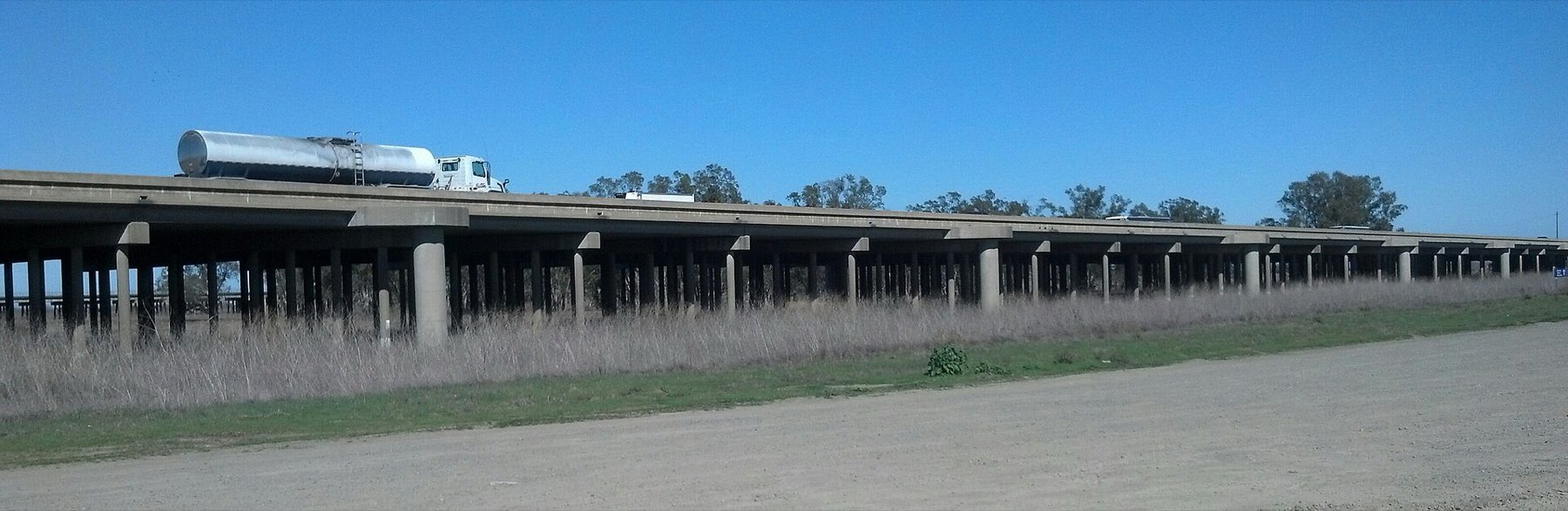
The I-80 Yolo Causeway crossing the Yolo Bypass
The Yolo Causeway carries I-80 over the Yolo Bypass west of the city, a long raised stretch with few places to pull off.

Where the spare and the jack usually are

Spares hide in different places by vehicle type. The owner's manual has the exact spot for your model, in the section on flat tires.

VehicleSpare tireJack and wrench
Sedan or hatchbackUnder the trunk floor, often under a cover panelIn a foam tray beside the spare or a trunk side panel
SUV or crossoverUnder the cargo floor, under the rear of the vehicle, or on the rear doorCargo-area side panel or under the floor
Pickup truckHanging under the bed near the rear bumper, lowered by a crank rodOften behind or under the rear seat
MinivanOn a cable under the middle of the vehicle, reached from insideA rear side panel or a floor compartment
Newer car with no spareAn inflator kit: a small compressor and a bottle of sealantNo jack; check for run-flat tires in the manual

Write it down before you dial

Fill in the ticket and tap send. It goes to the local operator's phone as a text, and they call you back on the number you give. In a hurry? Call (916) 999-7212 instead.

On a freeway, tap the road and your direction, then add the nearest exit or cross street. That is enough for the operator to find you.

(916)999-7212

Breakdown ticketSacramento, CA

On a freeway? Tap the road, then the direction

Sacramento and the towns around it

Calls come from every part of Sacramento and from West Sacramento, Elk Grove, Rancho Cordova, Citrus Heights, Roseville, Carmichael and Fair Oaks. Travel to the far edges of the county is part of the quote you hear on the call.

  • SacramentoSacramento County · home base
  • West SacramentoYolo County · across the Tower Bridge
  • Elk GroveSacramento County · south on Highway 99 and I-5
  • Rancho CordovaSacramento County · east on US-50
  • Citrus HeightsSacramento County · northeast on I-80
  • RosevillePlacer County · northeast on I-80
  • CarmichaelSacramento County · northeast along the American River
  • Fair OaksSacramento County · east on the American River

Town-by-town coverage, with a map for each

Call (916) 999-7212Text